Why is it still a thing?
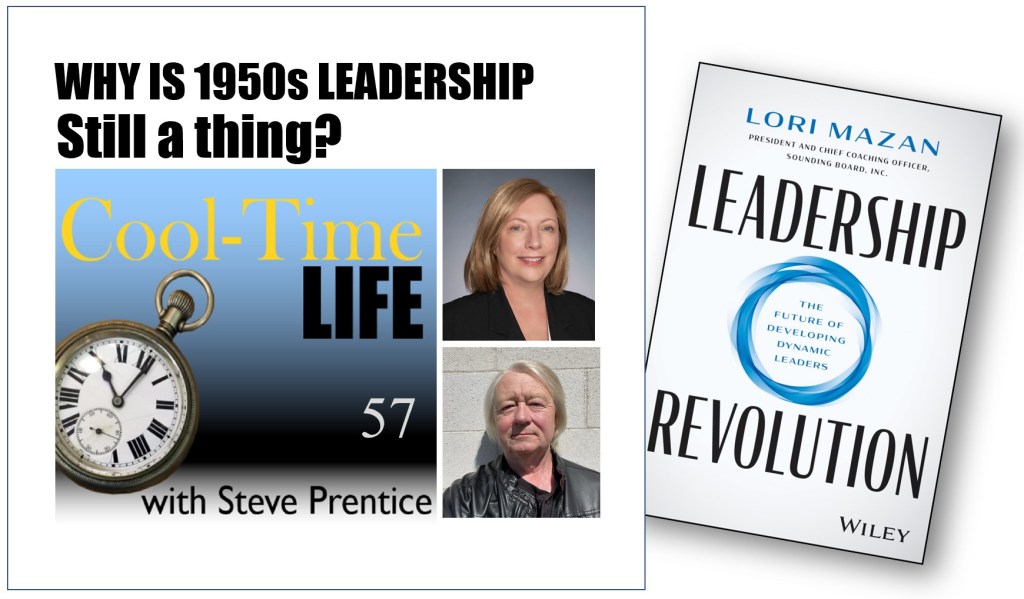
Far too much of our leadership practices are based on thinking developed as far back as the 1950s. Lori Mazan says this needs to change, but there are many reasons why it takes so long. Lori is co-founder, president, and chief coaching officer of Sounding Board, Inc., a center for leadership development. She is also author of a new book, Leadership Revolution: The Future of Developing Dynamic Leaders.
Listen to the podcast at our podcast host, Blubrry.com, or find it on your platform of choice, including iTunes, Spotify, Amazon, Audible, iHeart, and YouTube.
Transcript
Steve
The future as they say is here. We conduct business with computers that we carry in our pockets. We hold virtual meetings from locations around the globe, and we have access to endless resources with just a tap of a finger. So why are we still developing leaders like we did 3040 and even 50 years ago? This is the question posed by executive coach Laurie Mazan, who is author of the new book leadership revolution, the future of developing dynamic leaders. She says leaders need the nimbleness and openness to respond to environments where the rules are constantly changing, as he’s here with me today. Each of our CoolTimeLife podcasts focuses on a topic dealing with people productivity, technology, and work life. And each offers ideas and facts you need to know about to thrive in today’s busy world. An index of our podcast is available at cooltimelife.com. So Laurie, welcome to the CoolTimeLife podcast.
Lori
Hi, Steve. So happy to be here.
Steve
So we are here to talk about a problem with leadership, that seems to be one that perhaps is an elephant in the room. We’ve got new workplaces, new work styles new technologies, and of course, a continuous feed of new working people coming in many of whom were born after 911. Now they’ve come from an untidy generation. Yet, Laura, you say that leaders and leadership hasn’t really changed much since the 80s? Or maybe even from the 1950s. I agree with you. But first of all, can you describe what you mean by that? What are these leadership styles from half a century ago that we’re still holding on to? Oh,
Lori
So the so much of the leader development approaches that organizations use today came from the last century, like even the most basic idea of skilled training, it really started in the 60s and 70s, as part of OSHA and safety training. And then it became the predominant development tool. And yet, only about 10% improvement is a result of training, online training in person training. So that’s just not nearly enough to develop leaders at the level that organizations need them now. And virtually everything around leader developments from the last century like self assessment tools, 360 assessment tools, the nine box performance or talent evaluation tools, every style and leadership approach is all from the last century, and yet the environment that we’re operating in, has changed dramatically in this century.
Steve
Now, again, I agree with you, and I have I’ve seen that firsthand. But the question then becomes, well, why I mean, leaders are supposed to carry that big vision, what have they not noticed? Why are they so behind the times, given that their job is to drive into the future?
Lori
I think a lot of leadership is older at this point. And so they’re really familiar with ideas from the last century. I also think there’s not a lot of new options. So an interesting situation happened with performance evaluations. In the late 2000s, a lot of companies started giving up the standard performance valuation. And then in around 2015, they started re adopting it. And one of the reasons that was there wasn’t any alternative. So those old style approaches are sticking just because organizations need to have something. And there’s not a lot of new things out there for people to utilize.
Steve
I find that amazing. It makes me feel like these companies should still be using typewriters as opposed to computers. I mean, they kind of like embrace technology so easily, but they haven’t embraced this, this change in approach. And I mean, I’m seeing this with some of my clients who will readily admit that they have a command and control style that are very hierarchical, and very fearful, perhaps of letting go of what they know. Yeah, so we have this as a problem. Yes. Okay. So what are you seeing then?
Lori
Yeah, yeah, literally, we’ve been trying to combat that command and control approach for 30 years now. And we still have not been very successful. So we need a leadership revolution.
Steve
Okay, so we’ve established now why we need it, or at least we can conclude that point by suggesting perhaps that, you know, companies who continue to hold on to these decades old styles, are they destined to fail? Are they destined to die away if they stay doing what they’re doing? Or are there some benefits to sticking with the command and control system?
Lori
I think some people think they’re better fit. The command and control style does create compliance. But what it doesn’t create is commitment. It doesn’t create a workforce that goes beyond the basic that goes beyond, hey, I did my job. And that’s all I need to do. I also think in the changing environment where, you know, 20, 30 years ago, people stayed at one job, one company their entire career. Now, people are changing jobs every two to three years, like how are you going to retain your employees, if you have a style of leadership that nobody wants to be subjected to? And now we’re talking about retention, engagement rates. And this level of commitment and trust that just doesn’t come from a command and control style? Is that fear based approach, right? Not a trust based approach?
Steve
Yes, a fear based approach. Absolutely. So this creates a real triple threat here. First of all, we’ve seen in the last couple of years, the ideas of quiet quitting, and the great resignation, people leaving, not necessarily just because they don’t like their leader, or because the work doesn’t seem worth it anymore, which has an immediate reflection back on the leaders who are not making it worth it to them anymore. And in addition to that, we have a workforce that is so much more aware of their own individual career mobility, there isn’t that need that fear to stay in one place for decades, any longer. So these should be substantial Wake Up Calls to leadership, or to the boards of directors, right?
Lori
Yeah, I was just thinking like, these days, the younger generations, they don’t view work the same way. They don’t view it as a means to an end, they view it as a means. So they want work that they have influence over that they can have impact with that they’re passionate about, they’re not, you know, post industrial revolution, where they’re going to be satisfied, you know, screwing in a boat for 30 years and waiting till retirement, the whole dynamic of the workforce has changed. And then you add low unemployment, we really have low unemployment for a long time. So being able to retain skilled, you know, passionate, committed employees really is a big challenge.
Steve
So we need to look at sort of fluid and dynamic workforce. Also one that maybe doesn’t embrace the idea of old school things. I mean, if you think about talking to somebody who is in their 20s, right now about some kind of system, even like Jack Welch, for example, you’re going back into an era that there is the precede some enormous Lee. And so any sort of philosophies you want to pursue, they’re largely out of touch with those kinds of things, not through any fault of their own, but because that’s where we all are in time right now. So skills based development is not enough for leaders in your 30 years of executive coaching, you know, working with leaders, what do you teach them? And what sort of pushback or agreement do you get from the people that you work with?
Lori
Can I just back up and go to Jack Welch for a moment? Because those kind of classic leaders, Jack Welch, retired in 2001. Like, we started getting mobile phones in around 2007. So it was like a very different environment that he was operating in. I sometimes tell folks in my own company like, hey, if we didn’t even have an email for half of my career, and they, they’re just like, how that literally asked me, how did you operate? And I’m like, Well, today, we survived it. I think the other thing that’s really different from the rook Welch timeframe is that timeframe, the priority was on shareholder value. Employees, again, we’re just means to get to that shareholder value. And if you’ll notice that range of leaders are almost all white men. So there was just a very different level of diversity than as well. So fast forward to now and you know, the priority sure is on show shareholder value. But that’s not the only priority because you can’t get shareholder value, if you don’t have this engaged workforce, that staying at your organization long enough to have some impact. So that leads to what do I do in my coaching? You know, it really is helping to shift mindsets. And what we do is we help people to think differently, and then line up new behavior that matches with that new thinking. So that that behavior You’re sustainable over the over time. And it’s sometimes challenging. You know, we’re kind of all dogs and teaching old dogs, new tricks can be tough. But I do find that most people are interested in growth and development. And if we can find the kind of a motivation point for them, where they can really see what I am doing is no longer working, it’s not meeting my own goals. And here are my own goals. And then here’s some thinking and behaviors that can really get me there, then people are willing to try new ways. And sometimes those new ways create sort of a lot of liveness, or activity or impact that then reinforces that new thinking and the new behavior.
Steve
Could you give me an example of something you would teach to one of your clients, you know, as a new way, a new thing? Like a What about thing? You know, you ask a client, what about if you do this? How about if you try this, what will be an example of something you’d give them as an assignment to try?
Lori
So we don’t really advise as a coach, we’re more like a thinking partner. So I’ll use an example of trust, because one of the questions that come up a lot in recent years, last couple years is, you know, what about trusting employees who are not coming into the office, like I used to know they were working because they were physically present. And now they’re not physically present, or only physically present some of the time? How do I know they’re working. So this is just a whole topic around trust. And so what we would do is uncover, you know, the leaders thinking around their trust of their employees. Help them understand the impact when they are showing a lack of trust. And then help them understand what the impact might be when they are setting up a system that’s based on trust. Help them identify what some of those actual behaviors and systems might be, and then give them a chance to try it. And then say, hey, what do you learn from that? Right? Did you find that people were actually more committed and providing a higher quality of work when you showed them trust? Or did you find that they all slacked off and didn’t do anything, or the opposite when you didn’t trust them, and you’re trying to, quote, prove they’re working, that actually make them work more, or make them work less. So it’s almost like this iterative experimental approach. Because if I just tell them what to do, it’s very easy for that leader to either make me right or wrong. Oh, you told me to do that, and it didn’t work. Or even if you told me to do that, and it didn’t work, now, it’s me, it’s not them. So for the leader to really have impact, they have to own their own thinking, and their own actions. And the other part of this is leaders are successful in relation to their context. So Jack Welch is a great example. You know, he was successful in GE, if he had been at another style company, he may not have been as successful. And one of the things that was part of my coaching career is a lot of GE employees that came up under Jack Welch moving to other companies of other styles, and not being successful. And I would get called in repeatedly, because that person’s leadership approach was rocking the boat, or stepping on toes and another culture. That wasn’t the same as a GE and it was very difficult for those leaders to change their approach. At least 30% of those folks left that company and tried to find a culture that was closer to GE, because they felt like they they actually couldn’t change. So yeah, that worked at GE, but it didn’t work at other Fortune 100 companies that had a very different culture.
Steve
So context is really important as well, even when you bring up things like fortune 100, or even think across to like Dow Jones, the companies that were the foundations of those kinds of analytical reports, so many of them have disappeared, or consequently, failed is because of time, or lack of adapting.
Lori
Right. Yeah, lack of adapting. Yeah, totally.
Steve
It’s interesting, you were mentioning before about, you know, trusting people to work and I can only trust them if they’re at the office where I can see them. I can tell you in my earliest days when I was consulting on software and computer technology stuff way back in the 90s, one of the first things people asked me was how can I fast switch my screen so that when the boss comes in, it looks like I’m working at the myth that just because someone’s physically in the office, they’re actually working. I mean, that, to me is the number one mistake that managers and leaders can make.
Lori
It’s a Yeah, it’s a perception based. I actually had a client one time where the organization and this was like a fortune five, organization called me in because they didn’t think this one employee was working hard enough. And so and, you know, high level leader, and so I watch what they were doing and check them out. And they were working. But I asked him, What do you do when you come into the office, and that person was coming in early, going to the cafeteria, getting a cup of coffee and reading the newspaper from like, seven to eight in the morning, and then starting work? And I was like, Who do you see inside the cafeteria? Sure enough, they saw their boss or the CEO or somebody, and I said, stop reading the newspaper in the cafeteria, get your coffee and come back to your office. That’s the only thing he did different the next time he was up for evaluation and got promoted. Right? It was like just all perception of working, not actual working. So how do you know if people are actually working not because they’re there with their body. But because there’s output, there’s outcome, there’s deliverables, that’s what needs to be tracked, not that someone is in front of their computer, of course, people can be doing anything on their computer. And believe me, they actually are, especially if they’re not engaged in their work, if they’re not finding it interesting, they’re not passionate about it, they’re not doing something that has impact that satisfying to them much easier to just scroll around social media or other things. You know, they’re doing work, that’s boring, and you know, not making any difference.
Steve
Absolutely. And I mean, the command and control mindset would say, Okay, if you’re, if you’re bored, and you’re not doing your work, then we’ve got to fire you. Whereas you could say, well, what, what is your passion, you know, maybe there’s somewhere else in the organization that is better for what you do. And of course, this is now becoming a major player in in just work today is is matching people to their culture. So it’s not only a matter of the time where and when they do the work, but also what kind of person they are, and how the culture can fit them and vice versa. So I see a lot of challenges to old school leaders who frankly would prefer I think that everyone stay in their own little space, behave, do their work, and then go home. So yeah, a lot of difficulties for people. Do you have any? I’m curious to know, do you have any role models that you’d like to share with your clients?
Lori
Um, you know, the ones I have, had the most experience with of late is a lot of the new sort of venture backed startups in the Silicon Valley where they are fully remote, or they are doing things in a very different way. And primarily, that’s because they are younger, and their promises really around innovation. So that innovation theme runs through everything, including leadership. I have not seen so many organizations, large organizations adopting things very differently, I think pocket to dark things. And I do find that the HR and people and culture functions are looking for new ways because they have the view of the whole organization. And they are seeing that the old ways are really not having the impact that they would enjoy. So they’re looking for some new ways to develop leaders to create this sense of connection between the organization and the individual to create the culture that keeps people wanting to be at the organization. But I think it’s a uphill battle for them because many of the more seasoned older leaders are not operating in a way that supports that approach.
Steve
I sort of see some of this like in geological terms, the strata in rocks when I look at the history of Microsoft, for example, only three CEOs in its history. Firstly engineer Bill Gates, then the walls the Wall Street high roller right Steve Ballmer. Now we have such an Adela, who is the kind of like The Love Guru. He wants to get to know all of his 150,000 employees and show love and I think that’s an interesting demonstration from one of the biggest most influential companies in the world.
Lori
However, there’s lots lots of they were just voted I think the The top five best run organizations, I think maybe in North America in the US. And because of that, and, you know, it seems really sappy. And if females were talking about love at the corporate level, they would get laughed out of the room. Yeah, but for man to talk about that. The reality is like, if people love their work, if people love their organization, if people love their colleagues, guess what they’re gonna be doing their best possible work. So it may sound sappy, but there is a core of truth in that idea.
Steve
So I imagine there are many leaders who are saying, Yes, I want to do this, I want to be part of this modern train, but they look around and they see their own bosses. And then they see the board of directors of the company all still stuck in the past, and are feeling well, I don’t dare do this. Because if I do, I’m the one who’s going to get fired, because I’m rocking a very old boat that is owned by all these other people in the room. So what can you you know, what can I suggest to someone who is feeling constrained by this tradition that surrounds him in the C suite,
Lori
I think one of the things is just go slow, like make incremental change that then you can point out to those older, you know, somewhat stuck people that impact. So, oh, we tried this with this team, and here was the result, we’d like to expand it to additional teams, right, it’s almost like you’re gonna have to show the impact, and then create expansion from that to bring some of those older thinkers along. Unfortunately, I also think that just the aging of the leadership population is going to make a big difference, because a whole swath of older leaders are going to retire. And the younger leaders are going to come in with a very different idea. So unfortunately, it’s going to be probably some aging out of the system.
Steve
So this letting nature take its course, that’s That’s it. These are fascinating times, and naturally, as humans age, they become naturally more conservative, if only and just sticking to the habits and the things that they knew. So you can’t blame people for wanting to stick with what they knew way back when.
Lori
But it’s clear looking, no, but I’ll tell you, from a teaching perspective, you know, our brains are very habituating. They like patterns, they like to repeat patterns that are recognizable. But notice as aging, what happens is you’re not creating new neurons and neural pathways, in the same way that you were when you were young. So one of the big motivation points for older leaders is if you start thinking in new ways, and creating new sets of patterns that you’re utilizing, it’s actually going to help you live longer, it’s actually going to support your brain development, it’s actually gonna, you know, slow down that doctor fee that’s happening inside your system. So thinking in a different way, and trying new things is actually to your own personal benefit, as well as everyone else. Us.
Steve
That’s a very good advice that sort of places the whole concept into a much more, much more gravitas. In the sense we’re talking about one’s own personal aging and vitality, not just simply a management theories, that’s really excellent advice. So with, you know, enormous changes just happening in this last year with AI appearing everywhere. And prior to that, of course, we’ve all been through the work from home stuff, which was starting before the COVID pandemic peak, and continues to be an issue right now. So leaders have a lot of things to face. And I would say that my last question for you would be when you’re talking about a secret to exceptional leadership, you know, we’ve spoken about some specifics now, what are people looking for in leaders? That is the secret to truly exceptional leadership?
Lori
Yeah, that’s a great question. Because if you can get people to a decent level of leadership, but what is that secret sauce that gets them from decent to exceptional? And I think it’s a set of capacities that are rarely talked about a capacity being something that can always be continually developed. You never like you never fill the cup. There’s always more that you can put in there. And some of those things have have to do with your internal compass, and having a very strong sense of your own internal balance and equilibrium. And if you look back over history, some of the biggest problems were people who did not have that in place and make, you know, poor choices not only for themselves, but for their organizations. But there’s a set of about five or six or seven capacities related to that, that I think elevates leaders from the basic to the exceptional. And I kind of call this being the eye of the storm, when you have just so much change swirling around you, how do you find that place in the center of the storm where it’s, you know, clear and bright and sunny, and you have that 360 view around you, and you’re not just getting pushed one way or another by the economic or organizational forces. When you get to that place, there’s kind of an internal strength related to staying in the eye of the storm. And that helps others to trust you and feels like you’re not going to get pushed over by the board or by, you know, some demanding customer or by the economy or whatever it is that there’s something solid there that employees and the organization can depend on. And when you get to that level, you know, people want to follow you,
Steve
Laurie, this is amazing, and highly practical and visible, intelligent ideas. And I say that because it allows people to see the potential not to simply hear it. So I thank you very much for the guidance you’ve provided to our listeners today. So tell us a little bit more about you about your service, your practice your publications, and where people can find you online.
Lori
So I’m the founder and president of a company called sounding board. And we provide coaching lead leader development for organizations and the software to be able to scale that kind of development approach. You can find me at Laurie at sounding board inc.com, you can find the organization at sounding board, Inc, www dot sounding board. inc.com. And I have a new book that just came out last month, and it’s called Leadership revolution, the future of developing dynamic leaders, and you can find that on Amazon and anywhere books are sold.
Steve
So this has been a wonderful absolute treat. Thanks. Now people know where to find you. I want to just simply thank you so much for being with me today on the CoolTimeLife podcast.
Lori
Thank you so much for having me. I really enjoyed the conversation.
Steve
Once again, Laurie’s book is Leadership Revolution, the Future of Developing Dynamic Leaders published by Wiley, and you can find out more about Lori and her company’s leadership solutions and services by going to sounding board inc.com that’s all one word sounding board inc.com. If you have a comment about this podcast or the series, please feel free to drop me a line through the contact form at cooltimelife.com where you can also find my social media links. A full listing of our episodes is available at cooltimelife.com. I update the episodes regularly so that the concepts do not get dated. So check them out and download whatever feels good. And if you feel you’re getting value from this series, please leave a review and tell somebody about it. And if you want to you can support us on Patreon contributions from our listeners allow me and my team to spend more time researching and preparing our podcast series. So if that feels fair to you, please visit patreon.com/cooltimelife until next time, stay safe and thanks for listening.
Thank you for visiting. Do you have comments or thoughts about this episode? Feel free to get in touch through our Contact page.
Tags/Keywords: leadership, command and control, assessment tools, Jack Welch
 CoolTimeLife