A conversation with Gregg Ward
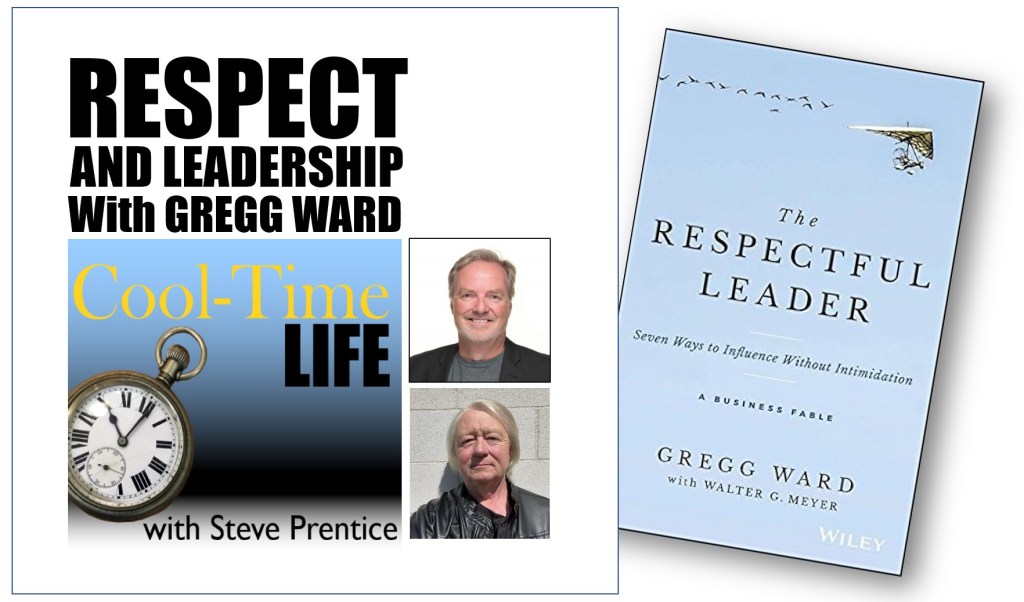
There is a change happening in workplaces everywhere, and it’s not just about the technology that we are using. It seems also that there has been a significant rise in disrespectful leadership: less willingness to work together, less desire to grow together as a team, an immediate desire to blame people and/or fire them, and a polarization that matches the type we are seeing in society and politics at all levels. Why are we seeing unprecedented levels of public disrespect in the workplace and outside it?
Listen to the podcast at our podcast host, Blubrry.com, or find it on your platform of choice, including iTunes, Spotify, Amazon, Audible, iHeart, and YouTube.
Visit Gregg’s website, RespectfulLeader.com.
Transcript
An accountant decides to leave her current employer to find a better job elsewhere. Soon afterwards she is sued by that employer for the cost of the professional training she was given while at the company. Another company decides to eliminate the work-from-home policy that had been established during the Covid period because managers cannot trust their employees to do their work unsupervised. They have two choices: come back to the office, or leave. What’s missing here and in so many other situations like this? A clear dose of respectful leadership.
Hello and welcome to CoolTimeLife. I’m Steve Prentice. Each of our CoolTimeLife podcasts focuses on a topic dealing with people, productivity, technology, and life, and each offers ideas and facts you need to know about to thrive in today’s busy world. An index of our podcasts is available at steveprentice.com under the podcast link.
There is a change happening in workplaces everywhere, and it’s not just about the technology that we are using. It seems also that there has been a significant rise in disrespectful leadership. Less willingness to work together, less desire to grow together as a team, and a polarization that matches the type we are seeing in society at large. What’s going on?
To answer these questions – and more – it is my great pleasure to have as my guest, Gregg Ward, founder and executive director of the Center for Respectful Leadership, bestselling author a true pioneer in his field and a really nice guy. Gregg, welcome to the CoolTimeLife podcast.
Gregg Thank you so much, Steve. It is an honor and a privilege to be here
Steve You well known for your expertise in this area of respectful leadership but lets start with the path that brought you here. How did you get into this? Where did you come from?
Gregg Well, it’s a rather circuitous tale. But I’ll try to compact it down. I actually trained and worked in New York City as a professional actor, writer, director, and producer. And I was that classic starving artist. And one day, I fell into a job creating a training program using live theater and improvisation techniques for the New York City Police Department. And it was there I got the first taste of doing training in a very what we now call an experiential way. And I just kind of fell in love with that work. And over the years on and off, I’ve been doing that I also became a freelance correspondent in Europe for a while for the BBC Radio and also a number of other UK media when I got to cover the fall of the Berlin Wall in 1989, which was super cool, and met a lot of very famous people mostly in the arts world, in Europe, and then eventually moved back to the United States where I took a job with a training company that specifically used theater as a training tool in schools and hospitals. And I built a program on diversity, equity and inclusion in the workplace back in the 90s using my actors and on the corporate side, it just absolutely took off and eventually decided to form my own organization and moved out to California where I now live and became an executive coach and a consultant and I still do training to this very day trying to use professional actors wherever I can.
Steve I truly love hearing circuitous life stories – people who follow their passions and how this can take you into new and unplanned areas. I applaud you for that. And it’s a kind of example that I love to share with students, especially young students in school who are trying to decide who they are or who they’re supposed to be. And offering that thing of saying, “Well, don’t, don’t so much decide who you’re going to be for the rest of your life, just think about what you like to do now, because it will carry you where you want to go,” that’s just marvelous.
So now, this is a time perhaps, for some of us who’ve seen a few decades go by, of almost surprising levels of hostility and polarization in the world, but also within the workplace. I think we’ve seen leaders change, not all of them not uniformly, of course, but significant ways that people are changing and aligning with their own particular ideas and attitudes in ways that perhaps, wouldn’t have been done a decade or so in the past. There’s always there’s always a few outliers who, you know, achieve enormously impossible things through the strength of their own personalities. But leaders are always looking for leadership. They’re always looking for that inspiration to know how they can do better. So I guess, you know, what have you seen? You know, let’s just put it down to studies that are showing that we are indeed reaching unprecedented levels of public disrespect right now and this is happening in the workplace. So what is going on? And why is this happening right now?
Gregg Steve, it’s an excellent question. The level of public disrespect that we’re seeing now really started to ratchet up, around 2016. Unfortunately, it’s tied in with our politics, things became pretty rough, pretty tumble, pretty aggressively disrespectful, out in the open during that period of time. And eventually, when the pandemic hit, that created enormous stressors on just about everybody. And if you’ll recall, there were certain people who were defined as frontline workers, they were irreplaceable, they needed to be working. And very often, they were in retailing, grocery stores, and health care and so on. And we were facing as a world not just as a nation, we were facing unprecedented levels of stress, uncertainty, illness, you name it. And so what did people do is they kind of reverted to their more primitive selves and started taking out their stress on each other and most specifically on frontline workers. And unfortunately, that kind of societal cocktail of deliberate kind of aggression and disrespect in order to achieve political call goals, coupled with the stressors, of surviving and a pandemic, kind of made for a perfect storm, allowing lots of folks to behave in ways that they might not normally do under different circumstances. So the research seems to indicate there’s two key pieces of research out there. Some of it done by Georgetown University, Dr. Christine pour out who is really an expert on this. She has been studying incivility and disrespect for 20 plus years. And what she has found is that we are experiencing some of the highest levels of disrespect not only in public, but in our workplaces that we’ve ever seen since the Vietnam War. And if you recall, during the Vietnam War, where there were marches in the streets, there was violence, there was bloodshed, and there wasn’t social media, social media has significantly contributed, in order to drive eyeballs has significantly contributed to our levels of stress, because social media is always trying to get us to be scared of something or there’s something urgent happening, and we need to pay attention. And so our primitive brains are constantly on high alert for danger, stress, threat, you name it. And so again, this this perfect cocktail, this soup of stress, and urgency and upset has just taken its toll on just about everyone. I’ll be the first to say that my views is sometimes very short. And I have to It’s everything I can do to take a deep breath, calm myself down and not allow my primitive instincts to take over. So that’s a rather long winded answer to your question. But to sum it all up, we are all under enormous amounts of stress. And if we take it out with something I’ve said for years, when the going gets tough, people get tough on each other.
Steve That’s a very good way of putting it I also thought that the soup of stress might be a very good title for your next book.
Gregg Whoo, I like that. Thank you.
Steve So you’ve got, as you said, a perfect cocktail of three things: you’ve got populist politicians who opened the Pandora’s box and basically gave permission for violence and retribution to happen. It kind of like stepping across that thin blue line of civil behavior. You have again the initial reactions and the fatigued reactions of the COVID pandemic. So to add to what you said, I mean taking our respect for health frontline health care workers and quickly turning it into some degree of disrespect. I think in terms of as they as they burned out, they were still forced to work ridiculous hours as the let’s say that the COVID pandemic lost favor with public opinion. And then you mentioned of course the third element there being social media and I think we’re both old enough to remember a time before social media existed. And I do remember you know, when all this came up when the internet came out and Tim Berners Lee developed the World Wide Web there was this notion especially with smartphones, the idea that we could all have the knowledge of the world literally in our fingertips at our fingertips in our smartphones. And the paradox How is turned around that rather than leverage the entire knowledge of the world? It seems that people have just focused in on the parts that they agree with and have magnified their existing biases to that degree would you say that would be a fair assessment?
Gregg I think that’s a terrifically fair assessment and beautifully summed up, at the end of the day, we’re now facing you, we used to be able to, in a way go to work, close the door and shut out the outside world and put our heads down on work. And nowadays, we can’t do that anymore. It’s just not feasible. And so whatever happens out in the world is going to be discussed and come roaring into the workplace. And so there is no separation anymore and those of us who are working from home well we’ve got the TV on we’ve got the news on we’re reading our phones and so on while we’re also trying to work so it’s just an amazingly different and unique place we are now in that I don’t necessarily think anybody anticipated.
Steve No, I think you’re right, I think I mean that this adds a fourth element to the cocktail now, which is the timeless aspect, not only having access to social media but the fact again that there was there was no time for rest or reflection. It’s a constant thing and I mean, I see this we all see this if people are even commuting on the bus or on the train everyone is staring at their phones everyone is always at their phone. So perhaps the lack of processing time for the mind to work through problems might be a contributor. I want to add one more to this just for the sake of – because it’s inspiring in my mind, you’ve mentioned before that you covered the fall of the Berlin Wall as a journalist for the BBC and others but I remember there was a book that came out called The World is Flat and think it was Friedman.
Gregg Thomas Friedman Yes.
Steve Yes. And I believe that’s the book that I read this in who said You know, when the Berlin Wall fell the Enemy at the Gates fell with it. We no longer had to fear communism in the way that we had throughout many decades of the 20th century. So without an enemy at the gate, do you think that perhaps not only in the in the US but other countries around the world as well? That we that one of the reasons we may turn in on ourselves in addition to the loss of time and the overload of information might be the fact that we need to have some sort of enemy to form our communities around and lacking that we have again turned in on ourselves?
Gregg Think that’s a very powerful assessment. I look at what I see on television and the balkanization of our stations, and what’s available to us, and I’m just as guilty as anybody else. I have my favorite news channels that I go to all the time, my I read my favorite papers, which all have their own political bent and so on and so forth and magazines. So there is no question we have become extraordinarily tribal. And now that we don’t have this big bugaboo, this giant communism coming to destroy us all, we turn on each other, we look for differences within each other, and who, who’s outside our tribe who’s inside our tribe, who threatens our way of life and being and we can’t ignore the fact that a black man was elected president of the, the free world is just you can’t ignore that. And there are tons of people out there who found that absolutely unacceptable in their minds. And they basically retreated to a place of they’re coming to take everything we have everything we built, which is going to be taken away from us. And I can tell you, it was the one I heard from West Berliners when I was there in 1989. I assumed it before I went that the fall of the wall would be a big deal on both sides of the wall. And it was for the East Germans. They were absolutely overjoyed with the fall of the wall because it also meant the German a Germany was going to reunify, but the West Berliners in particular that I talked to were just filled with fear and loathing of the communists. On the other side of the wall. I remember we’re talking this one elderly woman who told me she had family that she hadn’t seen since the wall went up and I said Surely you’re excited to see them after all these years and she spat on the ground. I kid you not. She spat on the ground. She said they’re communists. They’re coming to take everything we have. So that is a very powerful fear that plays itself out in all sorts of situations and all sorts of societies
Steve So we see this outside in society globally and not just again any one given country so why is this happening inside the workplace with C suite leaders who are expected to be educated and you know to have some degree of being able to raise themselves beyond this in the interest of the company’s prosperity the employees prosperity and shareholders prosperity? It seems and you know, there’s a wide spectrum here but there seems that there’s a lot of C suite leaders that do not play much place much value and respect any longer even though your research indicates that it’s a key driver of performance and partnership and productivity Why isn’t the C suite paying attention to the idea of respect?
Gregg That’s a wonderfully deep question. And I’ll try to answer it as simple as that. As I can see, the C suite is rewarded for results. By shareholders, you may remember the movement that started in the 1990s shareholder value, value, build shareholder value over all else. And so what happened is, we celebrated our cutthroat leaders who knew how to kick ass and take names, and drive results and drive up shareholder value. And so the jack Welch’s of the world became the most prominent examples of this kind of leadership style, what we didn’t hear about, because they were being celebrated so much these kinds of leaders, what we didn’t hear about was the damage, they were doing the turnover, that was resulting from this kind of leadership style, this command and control leadership style, the amount of complaints, the investigations, the D motivation, I mean, there’s just a huge list of impacts that can result when a leader just takes a command and control attitude, my way or the highway, I’m going to drive shareholder results over your dead body. And so the those folks were celebrated. I mean, nobody, nobody celebrates the leader who is patient, and thoughtful, and kind, and respectful. And that’s boring. And that doesn’t grab headlines. So our headlines are all about the leaders who are take no prisoners at cetera, et cetera. So we’ve really built a cult worshiping the leader who kicks ass, and gets things done and build shareholder value completely forgetting and ignoring the damage that they do along the way, except when it becomes so grievous that it blows up the company. And I can give you quite a few examples. I think the Enron scandal was the first time we started to see that kind of mentality actually blowing up a company and that was a long time ago. A lot of people are probably scratching their heads right now going well was that. But that was just one. And there are many, many examples where that kind of leadership style has undermined an organization to the point where they are either going bankrupt or needing to be parceled up and sold and so on. But that’s hard to put into a short headline, it’s much easier to celebrate something celebrate a leader who is who was the opposite of that, and who hasn’t. It was just keeps achieving, until of course they blow things up.
Steve I’m going to make a recommendation for anyone who is interested in the story of Enron, because it is it is absolutely a business case to for people to study not only in terms of leadership, but also in terms of management of a spiraling crisis. A book called Conspiracy of Fools: A True Story by Kurt Eichenwald. It’s also a great audiobook
But going back to what you were saying about socially aware or socially sensitive leaders being boring, it sort of paints a picture that the Lord of the Flies mentality still exists. It’s often part of human nature to admire the strong leader over the substantive emotionally intelligent leader, but do you see this again, in you know, we have a new generation of companies that are either that have either sprung up in the last couple of years, according to the freedom let’s say of becoming a unicorn, assisted by social media and crowdsourcing, and a few let’s see, uh, astute companies that are quickly turning around their business model to address that. But you know, can you point to any organization that do have respectful cultures and do embrace that?
Gregg Yes, yes, thank you. Thank you for that question because people often want to want to know who’s doing it, right, who has created respectful culture. And I’m going to give you two examples. One from a very new age-y perspective, whole Earth, kind of take care of the planet conserve the planet. That’s Patagonia. And Patagonia, as if you know, the history has consistently since its founding has been about conserving the earth, about taking care of resources, taking care of people. And all the reports Well, of many of the reports from Patagonia employees say that it is a wonderful organization to work for. And then I’m going to give you an old world example, which is Costco. And I actually my team and I have done a lot of research on the Costco culture. Now. They’re certainly are staid, and, and rather basic in their approach to their technology and retailing in general. But they create a culture of respect. And simple things like saying, Please, and thank you. And I often talk about this, I was in Costco not too long ago. I mean, I’m in there almost every week, but not too long ago, it was towards the end of the day, everybody was lined up, and getting ready to check out and the person in front of me needed a price check. It wasn’t available on the item. And I thought to myself, Oh, my goodness, this is really going to hold up the line and the supervisor turned to an associate and said, Would you please run back to aisle number 4033. And the price of this product, and the associates that absolutely. And they took off at a trot. And they came back very, very quickly. And the supervisors have said, Thank you for doing that. So quickly, I really appreciate you for that. And it was sincere and it was genuine. And you could tell that the associate felt respected and valued by their supervisor, and vice versa, you could tell the supervisor knew that he could depend on that associate. And that is, in general, what we have found in the Costco culture, it is one of respect. And if you’re a Costco member, then it’s very likely you to have felt the respect and that’s something that we’ve identify if you treat your team with respect, as a leader, they will treat your customers with respect, and all the boats will be lifted, everyone will benefit from behaving in a respectful way.
Steve Yeah it seems it’s very easy to do that I think it doesn’t have to be a new age idea I know that Richard Branson was a champion of this all through the latter decades of 20th century is he by the way anybody that you either admire or not admire?
Gregg I have enormous admiration for Richard Branson, partly because of his chutzpah and just, you know, nobody, nobody was more aggressive in self marketing than he was when he started out. And but he backed it up with a focus on kindness, on listening on encouraging innovation, not bullying people to be innovative, but much more about encouraging people and he’s built these the Virgin of extraordinary culture and these great companies and you know, the proof is in the pudding that you can thrive as a company if you treat people with respect and decency and civility.
Steve Absolutely and it’s great that you can point out companies that are, you know, either new or long in the tooth, but agile enough to recognize that in our changing society, I know that I could talk to you all day. But we want to sort of keep your time and everything in a good place here. But I mean, thinking about people who are in positions of leadership right now, not necessarily always C suite leaders but managers of any level. They are probably some of them at least are probably looking for ways to improve their leadership style to fit more into a more respectful style. Others might be just purely curious as to what this might mean with regards to their particular style currently. So what could you recommend to leaders of any type of group to help them maybe see themselves or develop more respectful, you know, valuing practices for themselves and for their teams?
Gregg Yes, if people would like more information about who I am and what we do at the Center for Respectful Leadership, all they need to do is go to respectful leadership.org on the internet, and they’ll find out a lot of information there they can also reach out to me at hello at respectful leadership.org and we will respond do our best to respond within 24 hours. We also have books available. The most recent one is called restoring respect, and they can purchase that on Amazon if they’d like or they can also find it through restoring respect book.com
Steve So we’ve got ourselves the book and the website URL. And now that you can get back out into the real world and meet and talk to people in person once again, tell us a little bit about you where you will be next, and what is your itinerary for speaking and working with people around the country?
Gregg I am about to embark on a national tour of as many Sherm Society of Human Resource Management chapters in the nation that will invite me and I’m going to be speaking first on March 7, in Oakland, at what is called Inspire HR West one of the largest HR conferences in the country. And shortly after that, I’ll be speaking in Pasadena, California, and that I’m eventually going to be speaking in Salt Lake City and Virginia, and Pensacola. And so if folks want to go to see the tour schedule and maybe attend one of my talks that one of the SHRM chapters they can find the tour schedule at restoringrespectbook.com They’ll see the schedule there and a lot of the chapters welcome non members and I would love to see you there
Steve That is fantastic, Greg. So I’ve got that. And I’ll make sure all that detail is there as well as the free conference pass tag that you put on there.
You know, Greg, this is the first time we have worked together, but I sincerely hope it is not the last, you’re just an absolute fountain of knowledge, relevant and valuable knowledge that I would love to partake in even further. So thank you so much for joining me today.
Gregg Well, thank you so much for having me on the cool Time Life podcast. It has been my pleasure and a real privilege and honor to be invited. Thank you Steve.
Once again you can find out more about Gregg and the work he and his team do by visiting the Center for Respectful Leadership.org at https://centerforrespectfulleadership.org/.
His books include The Respectful Leader: Seven Ways to Influence Without Intimidation, Bad Behavior, People Problems and Sticky Situations: A Toolbook for Managers and Team Leaders, and Restoring Respect – details about these can be found on is Amazon author page – just search for Gregg Ward, or use the link in the shownotes.
If you have a comment about this podcast, you can drop me a line through the contact form at cooltimelife.com, where you can also find my social media links and a full listing of past episodes. I update all episodes regularly so that they remain a collection of viable and timely concepts. So, check them out and download whatever feels good. If you feel you are getting value from this series, please leave a review, and if you want, you can support us on Patreon. Contributions from our listeners allow me and my team to spend more time researching and preparing our podcast series. If that feels fair to you, please visit patreon.com/cooltmelife. Until next time, stay safe, and thanks for listening.
Thank you for visiting. Do you have comments or thoughts about this episode? Feel free to get in touch through our Contact page.
Keywords: leadership, respect, influence, Gregg Ward
 CoolTimeLife